

Rebecca: every breath counts
Like any mother, Rebecca is always thinking of her kids. She’s a proud stay-at-home mom to two children, whose bright smiles are “always the best part of the day.”
But sometimes, Rebecca can’t catch her breath—and it holds her back from enjoying these everyday moments.
“I’ll be eating dinner, and then I can’t breathe. There were times when I would almost pass out picking my son up, picking up toys, basic things that moms do,” she said. “It’s hard when you can’t really take care of [your children] how you want to.”
In 2024, Rebecca was diagnosed with pulmonary arterial hypertension (PAH), a type of high blood pressure that affects the arteries in the lungs and the heart. The sound of herself gasping for air reminded Rebecca of her late father, who also lived with PAH. He died when she was 7.
“That was a scary thing, to hear my dad in my head,” the now-33-year-old recalled. “The right side of my heart was so severely dilated, [the doctors] told me I could potentially go into heart failure. And if the medication didn’t work, I would need a lung and heart transplant.”
Rebecca is no stranger to fighting for her health. She developed chronic Lyme disease in high school, which kicked off a “downward spiral” of autoimmune complications, including arthritis and stomach ulcers. At age 20, she was diagnosed with ulcerative colitis, a condition that worsened after her second pregnancy.
I thought, if I can’t get this medication, what do I do? What happens to me, and then what happens to my kids?”

Medication helps Rebecca lead a more normal life, but her expenses have been so high that at times she has gone without them. She faced this challenge at the pharmacy counter years ago when getting treatment for ulcerative colitis. It happened again in 2025 as she sought to get her PAH under control.
Rebecca’s husband’s health insurance plan would cover the PAH medication she needed, but first the family had to meet a $4,000 deductible and $6,000 out-of-pocket maximum—money the family didn’t have. As PAH is a lifelong disease, she could face this math equation every year.
“When you see that price tag, it’s a reality check. That $4,000 is more than my mortgage payment. That’s unfathomable for me, for anybody, to pay just in one sitting,” said Rebecca, who lives in central Virginia. “I thought, if I can’t get this medication, what do I do? What happens to me, and then what happens to my kids?”
Fortunately, Rebecca’s doctor told her about the PAN Foundation. A copay grant would help cover these out-of-pocket costs, so she could afford her lifesaving PAH treatment and be as present as possible for her young family. “I don’t know what I would do without [PAN’s financial assistance],” she said.
While some days with PAH are easier than others, Rebecca says her health is “on the right track.” She’s able to spend time outside with the kids, take them to the zoo, and pursue her passion for gardening flowers and vegetables—just taking breaks from time to time. And she’s determined that some greater good will come from her experience.
First, she’s helping her family. Genetic testing revealed that Rebecca’s daughter has the same inherited genetic mutation that causes PAH. There’s no guarantee Serenity will develop the disease, but Rebecca wants to prepare for the possibility—and she’s grateful so many more treatment options are available today, compared to when her father was sick in the 1990s.
“I can’t change the fact that I have [PAH], but I can help my family hit it head-on instead of just being in the dark like I was,” she explained.
Rebecca attends a local PAH support group, where she’s often the youngest person in the room. She knew she wanted to do even more but wasn’t sure what until she learned about the annual PAN Advocacy Action Summit. At this powerful three-day event in Washington, D.C., patients and advocates come together to urge change in healthcare policy. She immediately applied.
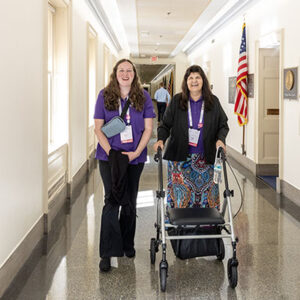
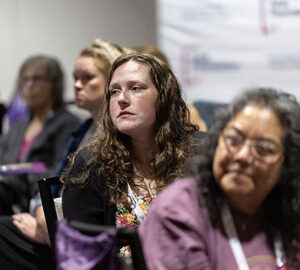
Rebecca admits she was intimidated by the thought of telling her story on Capitol Hill. But with the encouragement of PAN staff and her fellow patient advocates, she did, shedding light on how an often-invisible disease can have very real financial and emotional consequences.
She specifically asked Virginia lawmakers to support the reintroduction of the Safe Step Act, legislation that would streamline step therapy protocols to help people access their prescribed medications sooner. More than once, Rebecca’s doctors have challenged step therapy policies requiring her to first try medications they deemed inappropriate for her condition. “My doctors are great advocates for me, and I got very blessed with that,” she recalls.
Life with PAH can be scary, but Rebecca leans on her faith. “I’d rather help people and not be scared. If I can help someone else not have to deal with this, that would be awesome,” she says of her advocacy.
“I mean, I could help somebody in another state and never even know it,” she added. “That’d be pretty cool.”
Explore more stories shared by patients and healthcare providers.

Together, we can change lives
Join PAN in our mission to accelerate access to affordable health care. Learn how you can advocate with us, or consider a gift to help patients afford their medication costs.