
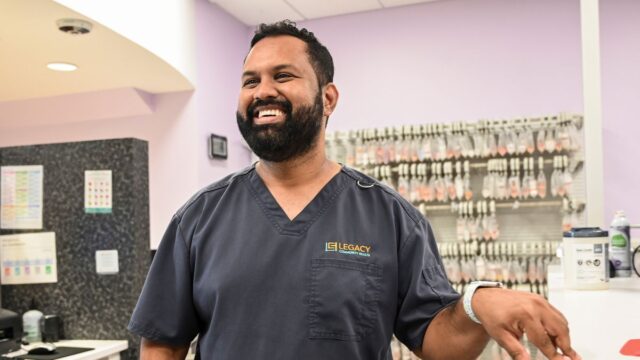
Kevin: community pharmacists are part of the solution
Kevin has a favorite “fun fact” about his profession: 9 out of 10 Americans live within 5 miles of a community pharmacy.
This makes pharmacists a key resource for helping patients understand and manage their health.
As Director of Pharmacy Operations at Legacy Community Health in Houston, Kevin is well-versed in his community’s needs, especially the need for affordable care. And he’s grateful for resources that help his patients overcome financial challenges—such as the PAN Foundation.
“At Legacy Health, we serve the community. We don’t turn anyone away, regardless of their ability to pay,” he said of working at the federally qualified health center (FQHC), which provides primary care to residents of underserved areas. “It’s great that, as a pharmacist, I can help when people can’t afford their medications. I can say, ‘Did you know about the PAN Foundation? They can help cover not only your medication copays but also your health insurance premiums and transportation costs.’”
After eight years with Legacy Health, Kevin knows the signs of someone who’s struggling with the cost of care. Some customers are upfront about the burdens of out-of-pocket healthcare expenses. Others are more subtle: They might ask to return in a week, after their next paycheck comes in. Some patients don’t pick up their medication at all, leaving it lingering on the pharmacy shelf while their health conditions go untreated.
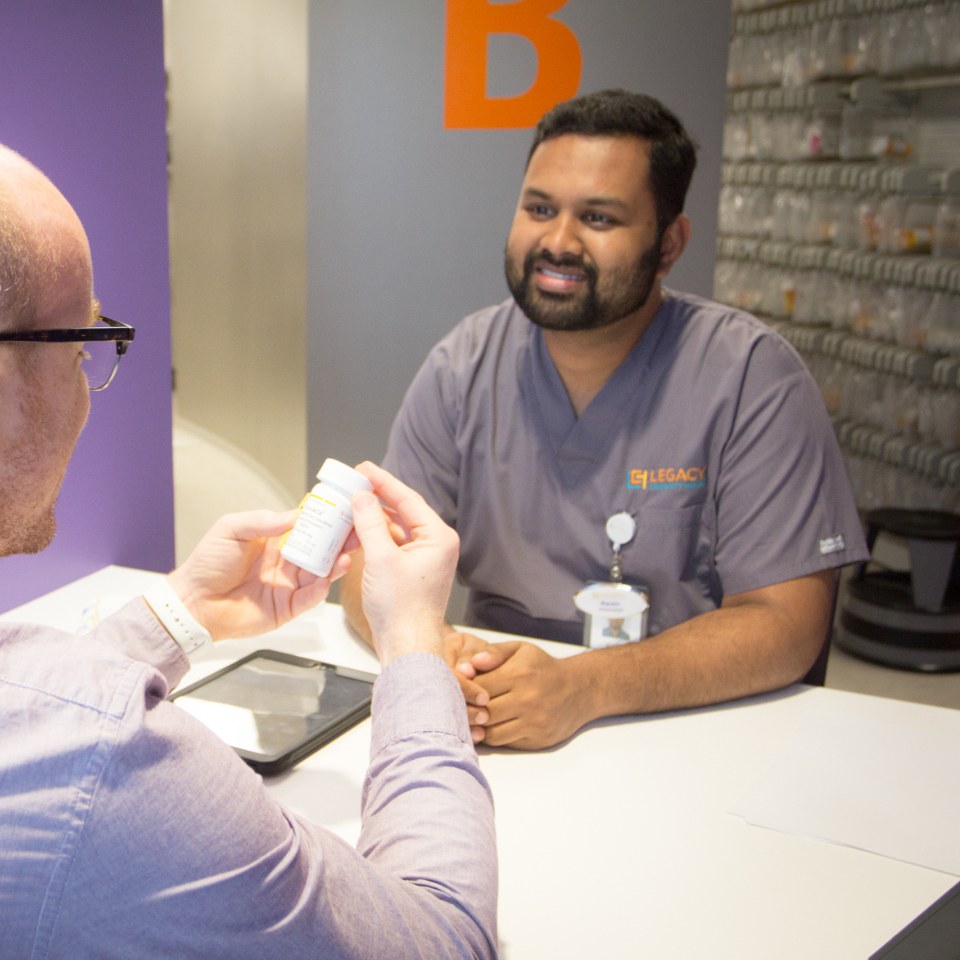
“A lot of people are choosing between paying for medication, rent, and food. Whether it’s a dollar or two, $10, $500, or more, cost can be a barrier,” the community pharmacist said.
In recent years, his health clinic has made it easier for pharmacists to refer patients to financial assistance programs. This way, people don’t necessarily have to wait to see their prescriber again for help—and they can get the medications they need much sooner.
Kevin remembers Amanda*, who couldn’t pay for her prescribed asthma inhaler. Without the medication on hand, every asthma attack meant a visit to the emergency room. Legacy Health guided her through the process of applying for an asthma copay grant from the PAN Foundation. Because Amanda also has limited mobility, they arranged to ship the inhaler straight to her front door, free of charge.
Amanda’s story underscores the need for pharmacists to see and treat the whole person, Kevin said. “We need to talk with people and say, ‘Hey, what else is going on with you?’” he explained. “The PAN Foundation has empowered our pharmacists to have those conversations. [Without such resources,] we’d feel helpless.”
Another patient, Diego*, lives with HIV and needs lifelong medication to keep the virus in check. But the copay was out of reach for his monthly budget. Eventually, his immune system weakened, and he needed to be hospitalized. Diego was prepared to dip into his life savings to pay for the antiviral medication until he learned about HIV financial assistance from the PAN Foundation.
Diego was skeptical at first—the grants seemed too good to be true—but Kevin assured him that help was truly available. “[Legacy Health is] local here in the community, and we make an extra effort to make sure people know the PAN Foundation is a trusted national partner,” he said. “As a nonprofit, we are here to help patients … and PAN is in the same game.”
Inspired by how much PAN has helped his patients, Kevin has deepened his involvement. He keeps up with PAN’s action alerts, contacting his Congressional representatives to advocate for policies that will improve the lives of people with life-threatening, chronic, and rare diseases. He encourages his colleagues, including the pharmacy students he mentors, to do the same.
“It’s just a simple click of a button or a simple phone call. People go into healthcare to help people, and this is another way we can help advocate for our patients,” he said.
Kevin also joined PAN’s Healthcare Provider Advisory Council, proudly representing the perspective of community pharmacies that serve many Americans who have low income or are on Medicare. “My goal is to bring awareness and knowledge [of PAN resources] to other community pharmacists. I think a lot of pharmacists are really excited about being able to give this advice, give some sort of solution, when their patients can’t pay for their health treatments.”
He added, “I just want patients to be empowered, and I want pharmacists to be empowered and aware of this wonderful organization.”
*This patient’s name has been changed to protect their privacy.