
Denise: healthcare is not a choice
During our transition, where to find information about:
- Our merged organization: uniting.patientadvocate.org
- Financial assistance: totalassist.org
- Additional direct patient services and resources: patientadvocate.org
- Education: panfoundation.org and education.patientadvocate.org
- Clinical trials education: clinicaltrials.panfoundation.org
- Advocacy: npaf.org
- Research: patientinsightinstitute.org
As someone who survived thyroid cancer nearly 20 years ago, Denise’s stance on health insurance is very simple: she must be covered at all times. What if cancer comes back, or she faces a new health crisis? The cost of care could be insurmountable.
“That experience always stays with you,” said Denise, who is 55. “Right now, I’m healthy. But I’m not going to risk not having coverage. It’s just not a choice.”

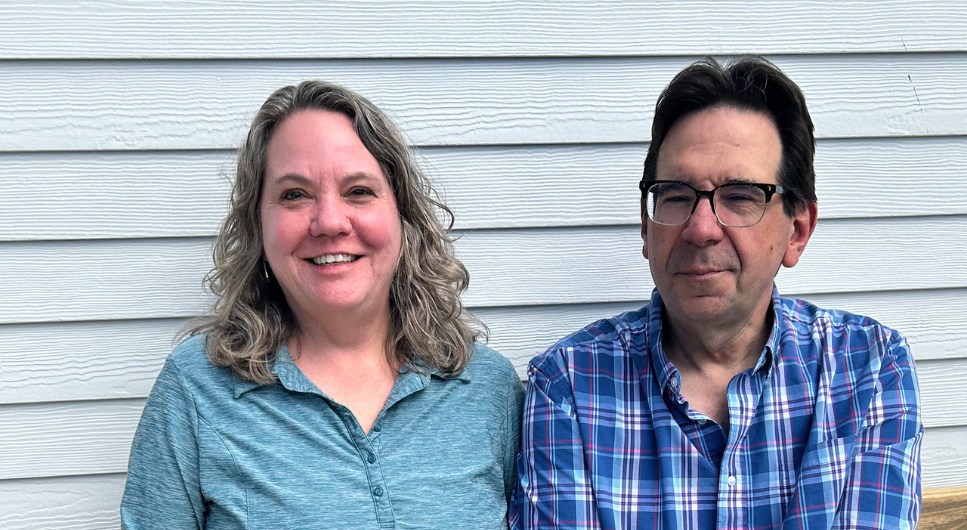
Denise and her husband, Bob, love their life in rural Virginia, where they moved after many years of residing in Washington, D.C. They get to spend quality time with her parents, who live about an hour away. And they head outdoors as much as they can to fly fish and take long walks with their dog.
In spring 2025, Denise started working for a small local nonprofit organization that didn’t offer employee health benefits. So, she turned to the Affordable Care Act (ACA) marketplace and found a plan that met her family’s health needs.
The plan fit their budget, too, thanks in large part to the ACA enhanced premium tax credits enacted a few years earlier. These tax credits improved access to care by lowering the cost of ACA insurance plans for low- and moderate-income Americans who aren’t eligible for Medicare, Medicaid, or employer-sponsored plans.
Unfortunately for Denise, staying insured has become much more complicated—and expensive. When the ACA enhanced premium tax credits expired at the end of 2025, her insurance premiums shot up from about $1,000 to $1,800 a month. The annual out-of-pocket deductible also increased by about $2,000, further straining their finances.
“[Bob and I] are trying to make cuts as best we can. We’re lucky that we can dip into savings, but that’s not really a long-term solution,” explained Denise. “At our age, we should be putting away money for retirement, and it’s not something we can do right now.”
Without the ACA enhanced premium tax credits, an estimated 4.2 million Americans stand to lose their health insurance coverage by 2034. The ACA not only made healthcare more affordable for more Americans when it went into effect in 2010; it also guaranteed coverage to people with preexisting conditions, such as cancer. Denise worries those protections may be rolled back, too. She was denied healthcare coverage in the past, before the ACA became law.
For now, Denise is committed to making the numbers work to keep her coverage. But she realizes many other Americans aren’t in the same position. Among the many things she has learned in her long career in international development and social services, when people can’t afford health insurance, they end up delaying or skipping necessary care.
“I see a lot of stories now in the news where people are just having to make really difficult choices as healthcare costs increase, like giving up their medication so their children are fed that month. They shouldn’t have to make that choice,” she said.
An activist by nature, Denise decided to tell her story to help others. When she learned about the PAN Foundation’s grassroots advocacy campaign urging Congress to preserve coverage under the ACA on social media, she was eager to participate. As part of this campaign, she has called and written letters to her lawmakers, sharing how the higher ACA premiums have affected her. And in October 2025, Denise helped organize an event to educate neighbors in her community about upcoming healthcare changes, including changes to the ACA, Medicare, and Medicaid.
With the ACA tax credits unlikely to be reinstated, options to lower monthly premiums for Americans who purchase coverage through the health insurance marketplace remain limited. Denise will continue to advocate for herself and others like her who are facing difficult trade-offs when it comes to accessing the care they need.
Said Denise: “I feel strongly that affordable healthcare is a right.”